Culture decoded
The “I Love You” Hand Sign: How to Make the ASL ILY Sign Correctly
Thumb, index and pinky up—one handshape that says “I love you.” It comes from American Sign Language, and one finger separates it from the rock-and-roll horns.
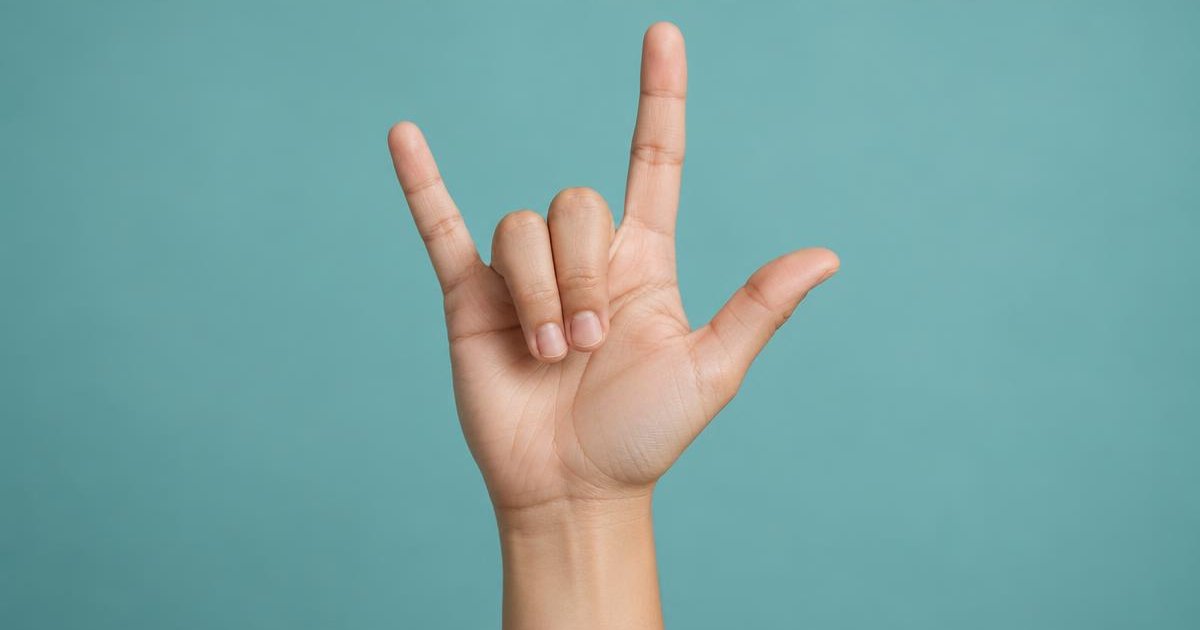
The I love you hand sign raises the thumb, index finger and pinky while folding the middle and ring fingers.
It blends three fingerspelled letters from American Sign Language—I (pinky), L (thumb and index) and Y (thumb and pinky)—into one affectionate sign.
If you searched for the i love you hand sign, you probably saw it in a clip, a classroom or a group chat and wanted the real story. This guide explains the meaning, the exact hand position, where it came from and when it can be misread.
01
How to do the i love you hand sign
Hold up your dominant hand, palm facing the person you are signing to. Extend the thumb, index finger and little finger, and fold the middle and ring fingers down against the palm. Keep it relaxed; you can hold it still or give a small shake for emphasis.
02
Where did the ILY sign come from?
The ILY handshape arose within the American Deaf community as a combination of the manual letters I, L and Y. It became widely recognisable to hearing audiences in the late twentieth century through television appearances, politicians and celebrities. Because it is a sign from a Deaf language, credit belongs to Deaf signers—not to internet trends that reuse it.
ILY develops as a blend of ASL letters I, L and Y.
The sign appears on national television and becomes known to hearing viewers.
Emoji 🤟 and social media spread it worldwide.
03
I love you hand sign meaning in real situations
Context changes the message. These examples show how the same hand can read differently:
| Situation | What happens | What it communicates |
|---|---|---|
| Saying goodbye to family | ILY held briefly | Love you, see you |
| Across a crowded room | ILY raised high | I love you from here |
| Concert with a Deaf friend | ILY with a smile | Affection and support |
| Texting | 🤟 | Love-you emoji |
ILY vs. rock on horns
The only difference is the thumb. ILY extends the thumb; the rock-on horns tuck the thumb over the middle fingers. Mixing them up is common, so check your thumb before posing for a photo.
When the i love you hand sign can be misunderstood
Learning ILY is a lovely first step, but it does not make anyone fluent. If you want to sign, take classes taught by Deaf instructors and learn about Deaf culture too.
04
Is the i love you hand sign part of sign language?
Yes. Unlike many viral gestures, ILY is a genuine ASL sign, and versions of it are understood in many other signed-language communities.
Viral gestures and signed languages are different things. Read our Gen Z ASL slang glossary and the Clock It hand sign guide for more on that distinction.
05
I love you hand sign: frequently asked questions
How do you do the I love you hand sign?
Raise your thumb, index finger and pinky, fold your middle and ring fingers, and face your palm outward.
Is the I love you sign ASL?
Yes. It comes from American Sign Language and combines the letters I, L and Y.
What is the difference between ILY and rock on?
ILY extends the thumb. The rock-on horns keep the thumb folded.
What emoji is the I love you sign?
🤟, officially named “love-you gesture.”
Can I use ILY if I am hearing?
Yes. It is widely shared, but credit its Deaf origins and learn more from Deaf teachers.
Is ILY the same in every sign language?
Not every sign language uses it natively, but it is widely recognised internationally.
Sources and further reading
Origins of popular gestures are often disputed, so EngBen presents commonly reported histories and avoids claiming a single inventor where evidence is unclear.
About this guide
Written and reviewed by the EngBen Editorial Team using linked references. We distinguish internet gestures from signed languages and update explainers when usage changes. About EngBen · Report a correction · Privacy