Culture decoded
The Rock On Hand Sign: What the Devil Horns Really Mean
Index and pinky up, thumb tucked: it rules concerts and sports stands. But the horns were warding off bad luck long before heavy metal.
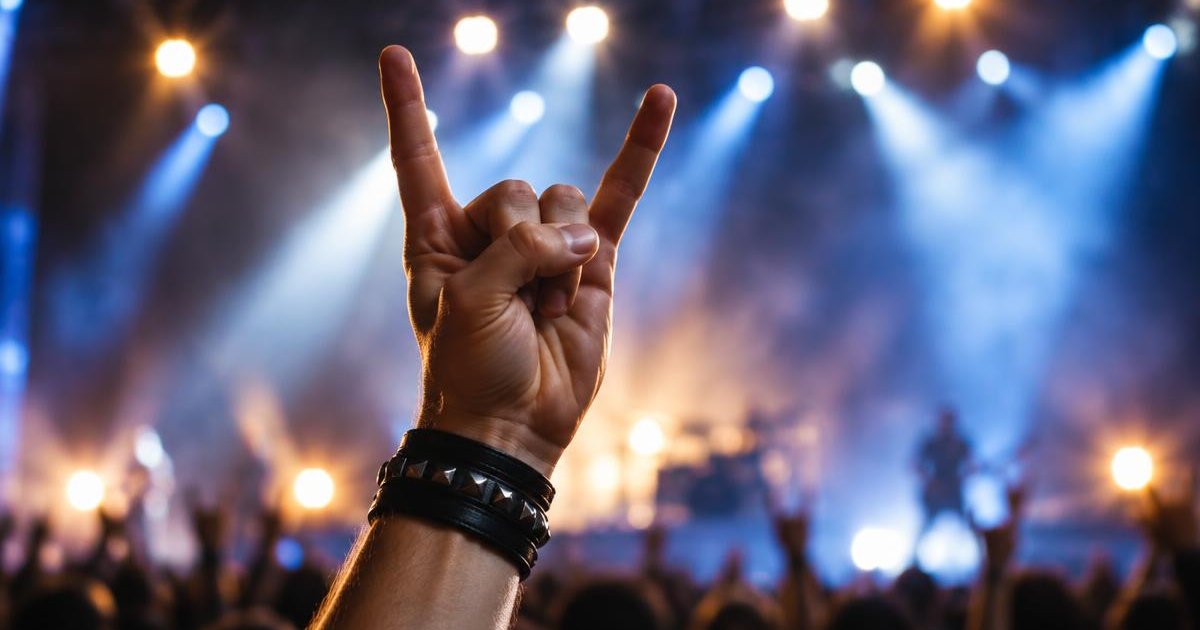
The rock on hand sign means “this rocks”—excitement, approval or loyalty to rock and metal music.
Its formal name is the sign of the horns. Depending on country and context, it can also mean protection from bad luck, team pride or an insult.
If you searched for the rock on hand sign, you probably saw it in a clip, a classroom or a group chat and wanted the real story. This guide explains the meaning, the exact hand position, where it came from and when it can be misread.
01
How to do the rock on hand sign
Curl your hand into a fist, then extend only the index finger and little finger. Your thumb holds the middle and ring fingers down. Raise it overhead at a show, or pump it to the beat. If your thumb pops out, you are making the ASL I love you sign instead.
02
Where did the rock on hand sign come from?
In Italy and around the Mediterranean, the corna—horns—has long been used to ward off the evil eye, or pointed at someone to imply that their partner is unfaithful. Heavy metal singer Ronnie James Dio is widely credited with popularising the gesture at rock concerts in the late 1970s and early 1980s, saying he picked it up from his Italian grandmother. Other musicians used similar hands earlier, so no one person owns it.
The corna wards off misfortune in Mediterranean cultures.
Ronnie James Dio brings the horns to metal stages.
Fans, athletes and the 🤘 emoji keep it global.
03
Rock on hand sign meaning in real situations
Context changes the message. These examples show how the same hand can read differently:
| Situation | What happens | What it communicates |
|---|---|---|
| Metal concert | Horns overhead | This rocks! |
| University of Texas game | “Hook ’em Horns” | Longhorns pride |
| Italy, pointed down | Corna toward bad news | Ward off bad luck |
| Italy, aimed at a person | Horns at a man | Insult about infidelity |
Rock on vs. shaka
Both raise the pinky, but the shaka extends the thumb and folds the index finger, while the horns extend the index and hide the thumb. One says “hang loose,” the other says “let’s rock.”
When the rock on hand sign can be misunderstood
At a concert the horns are friendly. Abroad, especially in Italy, Spain, Portugal or parts of Latin America, aiming them at a person can be read as calling them a cuckold. Point them upward and you will rarely cause offence.
04
Is the rock on hand sign part of sign language?
No. The horns are not the ASL sign for “rock.” In ASL, a similar handshape with the thumb out means I love you, so the thumb matters.
Viral gestures and signed languages are different things. Read our Gen Z ASL slang glossary and the Clock It hand sign guide for more on that distinction.
05
Rock on hand sign: frequently asked questions
What does the rock on hand sign mean?
It means approval or excitement, especially for rock and metal music.
Who invented the rock on sign?
No single person. Ronnie James Dio popularised it in metal, drawing on the Italian corna gesture.
Is the rock on sign satanic?
Its nickname is devil horns, but most people use it simply to show love of music.
What is the difference between rock on and I love you?
Rock on folds the thumb; I love you extends it.
Is the horns gesture rude?
It can be in some countries when pointed at a person, where it implies infidelity.
What emoji is rock on?
🤘, called “sign of the horns.”
Sources and further reading
Origins of popular gestures are often disputed, so EngBen presents commonly reported histories and avoids claiming a single inventor where evidence is unclear.
About this guide
Written and reviewed by the EngBen Editorial Team using linked references. We distinguish internet gestures from signed languages and update explainers when usage changes. About EngBen · Report a correction · Privacy